ServicesFront Load Dumpster Service
Front Load Dumpster Service in Horizon West
A front load dumpster stays put on your property and our truck empties it on a fixed schedule. We size the container and set the pickup days around how much trash you actually produce, so you are not paying to haul air or watching bags pile up.
What front load service is and who it fits
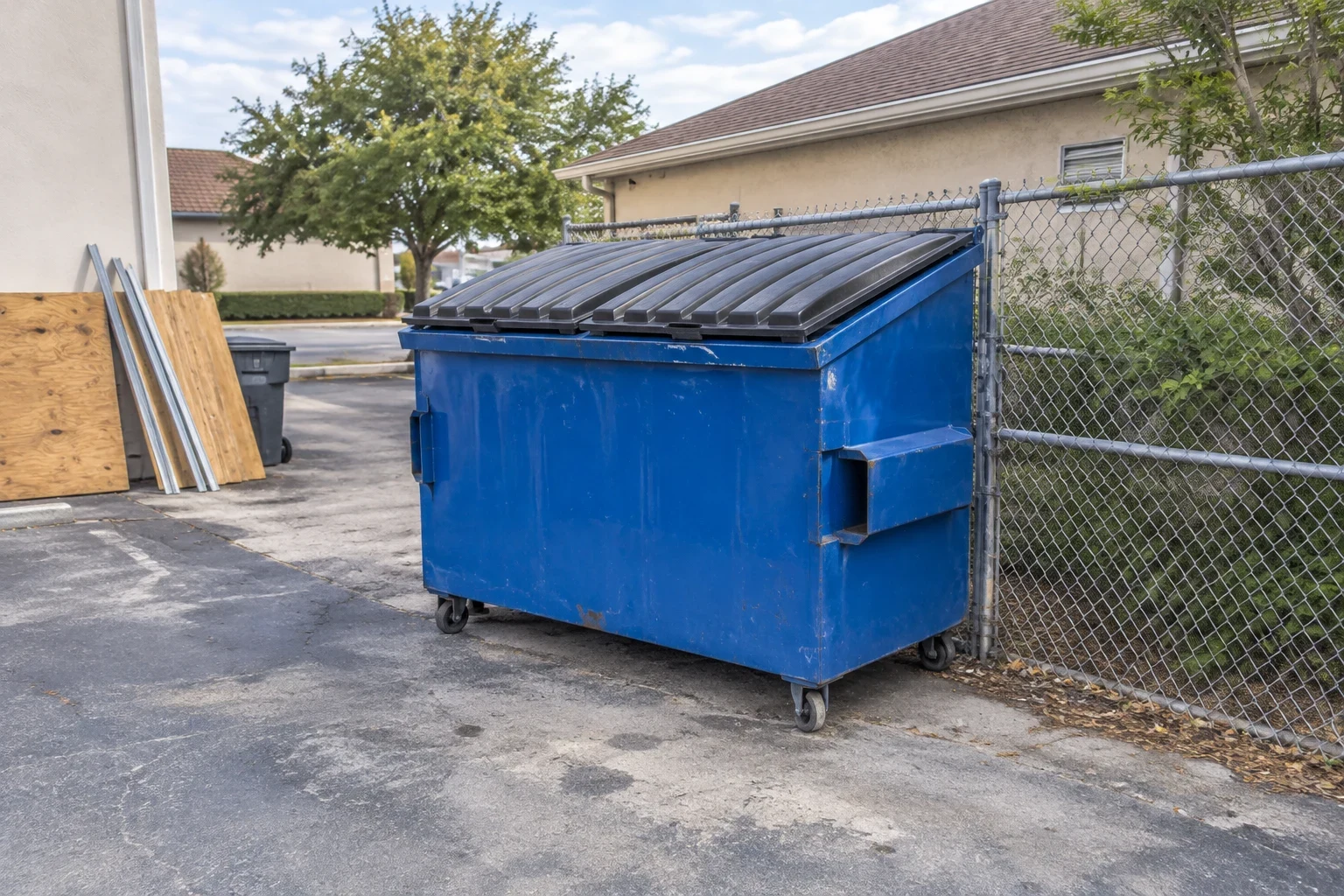
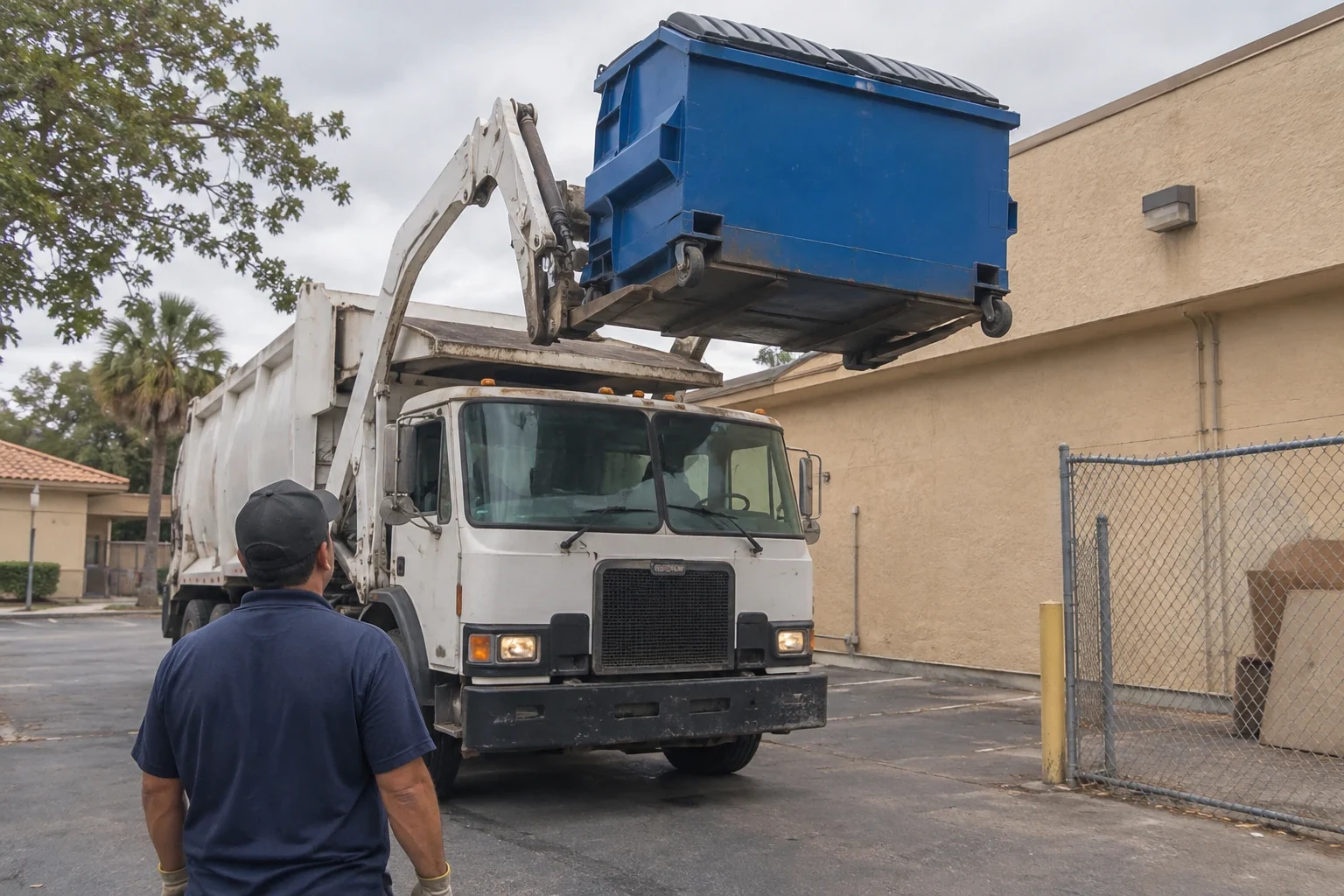
A front load dumpster is a steel container with plastic lids and fork pockets on each side. Our truck slides its forks into those pockets, lifts the container over the cab and tips it into the hopper. The container goes back on its spot and the debris is hauled away. Containers typically run 2 to 8 cubic yards, much smaller than a roll-off.
This is the right call for steady, ongoing trash: restaurants, retail, offices, churches, apartment buildings and community amenity centers. If your trash comes in one big burst from a cleanout or a remodel, our Roll Off Dumpster Rental is the better fit. We will tell you which one makes sense when you call.
What comes with the service
- A container sized to your volume
- We ask what you throw out and how fast it fills. Then we match yard sizes to that rate so the container is nearly full on pickup day, not half empty and not overflowing.
- A fixed pickup schedule
- You pick the days, from once a week up to several times a week. The truck comes on those days without you having to call each time.
- Placement check before delivery
- The truck needs a straight approach and clear overhead space to lift the container. We look at your pad, the approach and anything above it, like canopies, tree limbs or wires, before we drop the container.
- Lidded containers
- Closed lids keep rain out and cut down on odor and flies. That matters in Florida summer heat, when food waste starts to smell within a day or two.
- Schedule and size changes
- Business picks up, or slows for the season. Call us and we can add a pickup, drop one, or swap to a larger or smaller container.
Signs your current trash setup is not keeping up
Lids will not close before pickup
Open lids let rain soak the load, which adds weight, and let animals in. It usually means the container is too small or pickups are too far apart.
Cardboard stacked beside the container
Flattened boxes left on the ground blow around and can draw complaints. A larger container or an extra pickup day usually fixes it.
Strong odor between pickups
Food scraps and grease break down fast in heat. More frequent service shortens the time waste sits.
You keep renting roll-offs for routine trash
If you order a roll-off every few weeks for ordinary trash, a standing front load container is often simpler for that steady flow.
Staff hauling bags to their own cars
That is a sign the setup is too small for your daily volume.
What moves the price
Front load service is priced on a recurring basis, so the cost depends on how much we haul and how often we come. We quote by phone once we know your container size and schedule. Here is what drives the number.
Container size
A larger container costs more per pickup but can mean fewer trips. Sometimes stepping up a size is cheaper than adding a pickup day.
Pickup frequency
Each scheduled lift is a truck visit. Twice a week costs more than once a week, so we try to set the lowest frequency that still keeps lids closed.
What you throw out
Heavy material like wet food waste or dense debris weighs more than loose cardboard or office trash. Weight affects disposal cost.
Extra pickups
An off-schedule pickup after an event or a busy week is an added trip and is priced separately.
Number of containers
Some properties need two smaller containers in different spots instead of one large one, which changes the setup.
How we set up front load service
- 1
You call and tell us about your trash
We ask what kind of waste you have, roughly how much each week, and where the container would sit. You get a quote by phone.
- 2
We confirm the spot
We check that the surface can take the truck's weight, that the approach is straight, and that there is overhead clearance for the lift. If the first spot will not work, we suggest another.
- 3
Delivery
The truck sets the container on the agreed spot with the lids facing the way you need for loading.
- 4
Scheduled pickups begin
The truck empties the container on your set days and puts it back in place. If volume changes, call and we adjust the size or frequency.
Front load dumpster questions
How is this different from a roll-off?
A roll-off is a large open container we deliver for one project and haul away when you are done. A front load container is smaller, lidded, stays on site and gets emptied on a schedule. Roll-offs suit cleanouts and job site debris; front load suits ongoing trash.
What can go in a front load dumpster?
Everyday trash, bagged waste, food scraps and flattened cardboard are the usual contents. Hazardous materials, liquid paint, oil, batteries, tires and similar items cannot go in. If you are unsure about something, ask us on the call and we will give you a straight answer.
Will the truck damage my pavement?
A loaded front load truck is heavy, and thin asphalt can rut or crack under repeated lifts. A concrete pad holds up best. We look at the surface before delivery and tell you if it is a concern.
Can I change the size or schedule later?
Yes. Call us and we can swap the container for a different size or add or drop pickup days. Many businesses adjust after the first few weeks once they see the real fill rate.
What happens if the container overflows before pickup?
Call us for an extra pickup. If it keeps happening, that is a sign the size or frequency is wrong, and we will suggest a change rather than keep charging for extra trips.
Get front load service set up
Tell us what you throw out and where the container would sit. We will recommend a size and schedule and give you a quote over the phone.