ServicesConstruction Debris Removal
Construction Debris Removal in Horizon West
We drop a roll-off at your job site, take the drywall, lumber, shingles and concrete it fills with, and haul it away on the schedule your crew needs. You get a clear answer on size, weight limits and what can go in before the truck arrives.
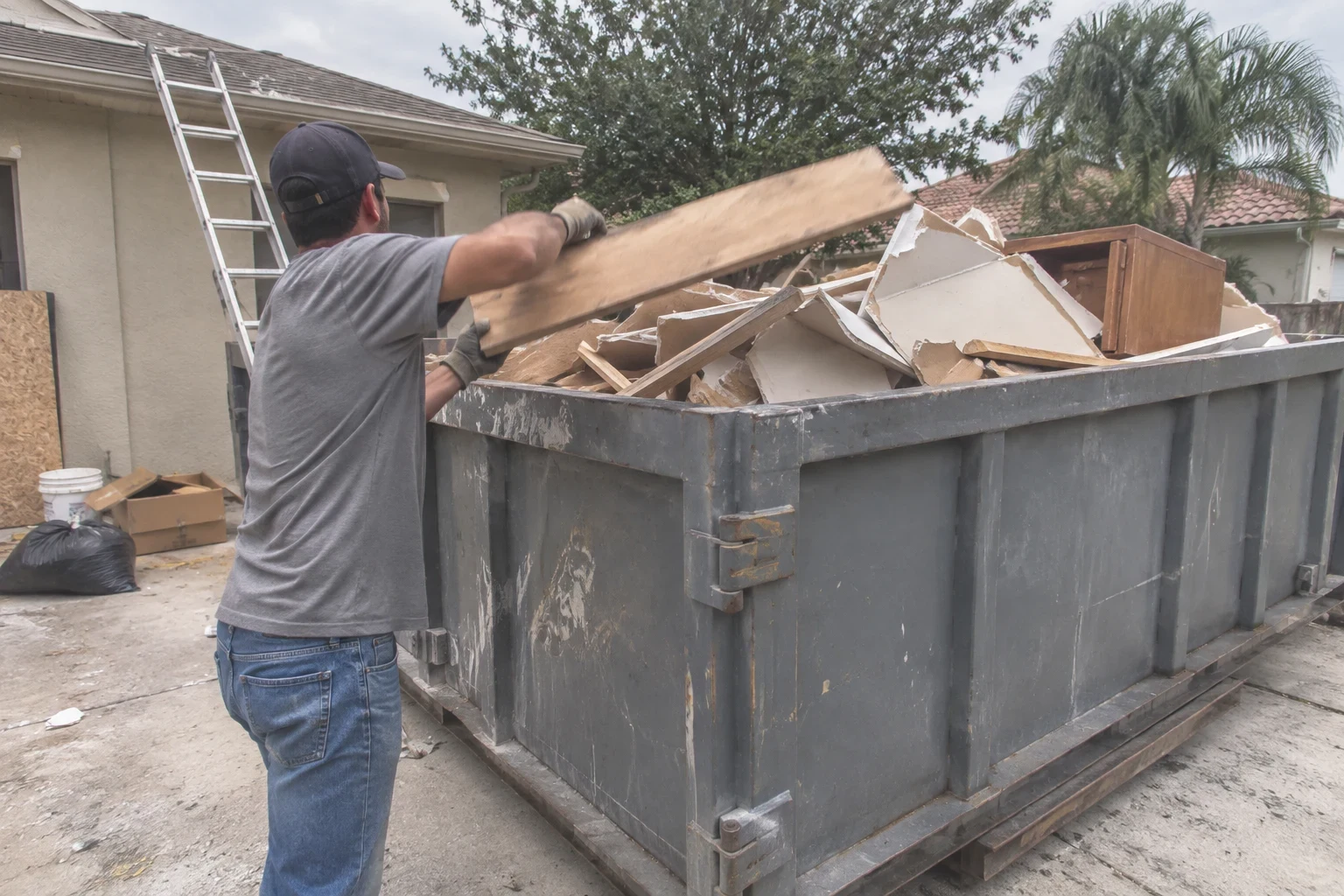
What construction debris removal covers
Construction debris removal is a roll-off dumpster sized and scheduled around a build, remodel or tear-out, plus the pickups that keep it from overflowing. It fits jobs that make bulky, heavy waste fast: a kitchen gutted to the studs, a reroof, a lanai enclosure coming down, or a new-construction lot shedding offcuts every day.
The material decides most of the plan. Drywall and framing lumber are bulky but light, so they fill a container by volume. Concrete, block, tile and asphalt shingles are dense, so a container can reach its weight limit while it still looks half empty. We ask what you are tearing out first, because that answer sets the yard size, the number of swaps and the cost.
For a one-time cleanout of mixed household items, our roll off dumpster rental page is the better fit. Businesses that need trash emptied on a set weekly route should look at front load dumpster service.
What the service includes
Sizing by material
We match the yard size to the debris type and the volume. Heavy loads like concrete and tile go in a smaller container so the truck stays within its road weight. Light, bulky tear-out gets a larger one.
Placement on the job site
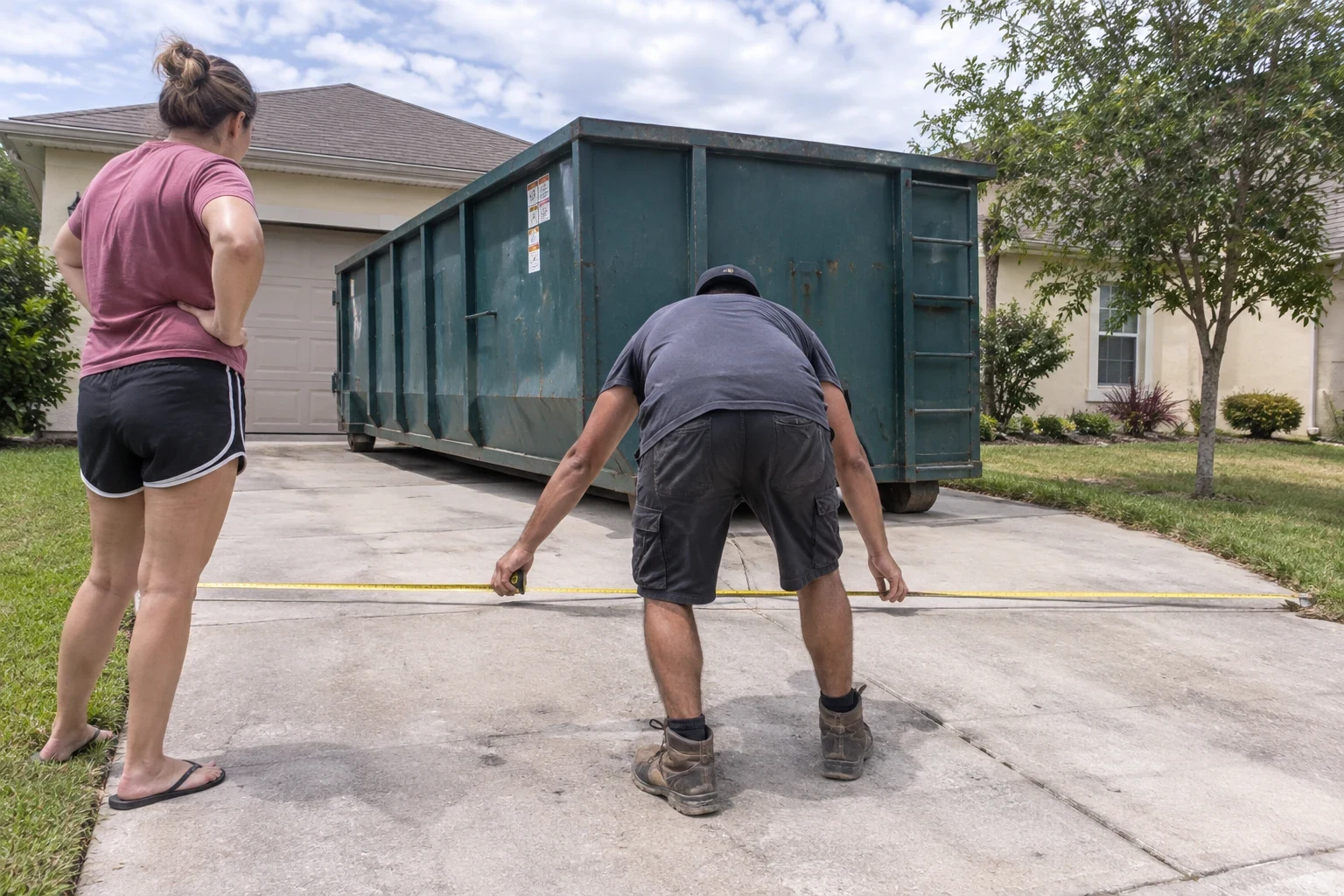
We set the roll-off where the truck can reach it and your crew can load it, usually a driveway or a cleared spot on the lot. On pavers or finished concrete, we can set boards under the rails to spread the load.
Swaps on your schedule
When the container fills, we pick up the full one and drop an empty in its place so work does not stop. Tell us your demo days and we plan swaps around them.
Haul away to the right facility
Each load goes to a disposal or processing facility that accepts that material. Mixed construction debris, clean concrete and yard waste often go to different places, which is one more reason we ask what is in the box.
Clear rules up front
Before delivery we tell you what cannot go in. Paint, solvents, batteries, tires and appliances that still hold refrigerant are the usual ones, and knowing early avoids a rejected load.
Signs your job needs a debris container
- The pile is outgrowing the curb
- Regular trash pickup is not built for drywall scraps, cabinet boxes or broken tile. Once tear-out starts, a curbside pile grows faster than a trash cart can clear it.
- You are pulling a roof
- Asphalt shingles and felt underlayment are heavy, and one roof can fill a container by weight. A box next to the house lets tear-off go straight from the eave into the container.
- Concrete, pavers or block are coming out
- Breaking up a patio, an old slab or a block wall makes dense rubble. It needs a container suited to the weight, not simply a bigger one.
- Debris is piling up around the work
- Loose nails, offcuts and broken glass slow a crew down and create a safety hazard. A container on site gives every scrap one place to go.
- Your HOA is asking questions
- Many communities around Horizon West have rules about debris and container placement. A tidy roll-off with a set pickup date usually settles those questions faster than a growing pile.
How a debris job runs
- 1
Tell us the material and timeline
On the phone we ask what you are removing, roughly how much, and how long the work will run. From that we recommend a yard size and a swap plan and give you a quote.
- 2
Delivery and placement
The truck sets the roll-off in the spot we agreed on. Keep cars, low wires and overhanging branches clear so the container can slide off the truck cleanly.
- 3
Loading the container
Load heavy material low and spread it evenly, and keep everything below the top rail. An overfilled container cannot be tarped or hauled safely.
- 4
Swaps and final pickup
Call when the box is full or on the swap day we set. We haul it away, drop an empty if the job continues, and take the last one when you finish.
What moves the price
The cost of construction debris removal comes down to a handful of factors, and we explain each one when we quote. Before delivery you will know the yard size, the rental period and how the weight allowance works. Two jobs rarely produce the same load, so the quote follows your material and schedule.
- Container size
- Larger yard sizes cost more to deliver and dump. Picking the right size the first time avoids paying for empty space or a second container.
- Weight and material type
- Disposal facilities charge by weight, so concrete, tile and shingles cost more per load than drywall and lumber. Each container has a weight allowance, and loads over it add cost.
- Rental length and swaps
- A weekend tear-out needs one drop and one pickup. A build that runs for months needs repeated swaps, and each haul is part of the price.
- Placement and access
- A driveway placement is simple. A street placement may need a right-of-way permit, and tight lots or soft ground can change how we deliver.
- Prohibited items
- Anything the facility will not take has to be pulled out, which adds time or charges. Keeping those items out from the start keeps the bill where it was quoted.
Construction debris questions
- Can I mix concrete with other debris?
- Sometimes, but it changes the math. Concrete is heavy enough that a mixed load often hits the weight allowance early. Clean concrete with no wood or trash in it can also go to a different facility than mixed debris. Tell us before delivery and we will set up the container for it.
- How full can I load the dumpster?
- Up to the top rail and no higher. Material sticking above the sides can fall off on the road, and the truck cannot haul it that way. If a load is overfilled at pickup, we will ask you to level it first.
- Will the container damage my driveway?
- A loaded roll-off is heavy, and its rails put that weight on two narrow strips. On concrete or pavers we can place boards under the rails to spread the load. Soft ground after a summer rain is the bigger risk, so we look at the spot before we set the container down.
- Do I need a permit?
- Usually not for a container on your own driveway. Placing it on a public street can require a permit from the county or city, and some HOAs have their own placement rules. We will tell you what we know about your location when you call, and it is worth checking with your HOA as well.
- Can you handle a roofing tear-off?
- Yes. Roofers usually want the container close to the eave so shingles go straight from the deck into the box. Shingles are dense, so we size for weight and can plan a swap for larger roofs.
- How long can I keep the container?
- As long as the job runs. Give us your expected timeline when you get your quote and we will build swaps into the plan. If the schedule slips, call and we will move the pickup date.
Get the debris off your job site
Tell us what you are tearing out and how long the work will run. We will recommend the yard size and swap plan, then set up delivery.